Cold rooms, rising gas bills, and a heater that seems to run longer every week usually point to the same underlying problem: efficiency loss. In Spring House, that makes heater repair spring house concerns more than a comfort issue; it becomes a cost issue fast, especially as Montgomery County homes head into late-fall startup and winter peak demand. After evaluating plumbing and HVAC contractors across Bucks and Montgomery Counties, one pattern stands out clearly: homeowners often wait until a complete no-heat failure before addressing declining performance, even though the warning signs usually start months earlier.
That delay is expensive. In reviewing service records and homeowner feedback across Southeastern Pennsylvania, the most common complaints are not dramatic breakdowns but creeping utility bills, uneven heating, short cycling, and dusty airflow. Those symptoms are especially common in older housing stock around Spring House, Ambler, Upper Dublin, and Blue Bell, where aging furnaces, boilers, and duct systems are often still expected to perform like newer equipment.
Central Plumbing, Heating & Air Conditioning, based in Southampton, PA, comes up frequently in those conversations because the company has been serving the region since 2001 and is known for around-the-clock response. For homeowners searching for heater repair in spring house, the more important question is not simply who can show up, but who can diagnose why a system is losing efficiency before another expensive winter month arrives. That is where technical depth matters, and it leads directly into what Pennsylvania winters actually do to heating systems.
What Do Pennsylvania Winters Actually Do to Heating Systems?
Pennsylvania winters expose small heating defects quickly and punish neglected systems even faster. In Bucks and Montgomery Counties, January and February cold snaps routinely turn minor airflow restrictions, burner issues, and thermostat misreadings into full-blown efficiency losses.
Field experience covering the residential trades in Bucks County confirms that Southeastern Pennsylvania homes face a unique combination of stressors. Many houses in Spring House, Horsham, Lansdale, and Willow Grove were built in eras when insulation standards were looser and duct design was less precise than current expectations under the Pennsylvania Uniform Construction Code. Add freeze-thaw cycling, drafty building envelopes, and long heating runtimes, and a marginal furnace or boiler begins consuming more fuel to produce less usable heat.
That matters because heater efficiency is not just about the equipment nameplate. AFUE (Annual Fuel Utilization Efficiency) is the percentage of fuel a furnace converts into usable heat. An 80% AFUE furnace turns roughly 80 cents of every fuel dollar into heat and loses the rest, while high-efficiency systems can reach 95% to 98%. But even a high-rated unit underperforms when filters clog, burners fall out of calibration, blower wheels collect debris, or duct leakage reduces delivered airflow.
Montgomery County homes also include a broad range of system types. Spring House and Maple Glen often feature gas furnaces with central ductwork, https://escatter11.fullerton.edu/nfs/show_user.php?userid=9965051 while older properties in Ambler or Lower Merion may rely on boilers and zone heating. Combustion analysis—a professional test of burner performance, fuel-to-air ratio, and exhaust safety—is especially important in those mixed housing stocks because poor combustion does not just waste energy; it can create safety concerns. NFPA 54, the National Fuel Gas Code, and the International Fuel Gas Code both underscore the importance of proper venting, burner setup, and gas piping integrity.
Have you noticed your heater running longer but the house still feeling cool near exterior walls or upstairs bedrooms? That is often where the efficiency story starts, and understanding the actual failure points is the next step.
What Causes Heater Efficiency Loss in Spring House Homes?
The most common causes of heater inefficiency in Spring House are restricted airflow, burner or ignition wear, thermostat inaccuracies, duct leakage, and deferred maintenance. The problem is rarely “old age” alone; it is usually a stack of smaller issues that add up.
In homes near Fort Washington, Blue Bell, and Spring House, forced-air furnaces often lose efficiency because return-air pathways are undersized or partially blocked. CFM (cubic feet per minute) is the measure of airflow moving through a heating system. When CFM drops below what the furnace was designed to deliver, the heat exchanger runs hotter, rooms warm unevenly, and the unit may short cycle. Short cycling means the heater turns on and off too frequently, wasting fuel and adding wear to components such as igniters, draft inducers, and control boards.
In older Doylestown and Ardmore homes, ductwork itself is often the hidden culprit. Seams separate, insulation deteriorates, and attic runs leak conditioned air before it reaches living space. Homeowners feel the symptom as “cold rooms,” but the utility meter records it as higher operating cost. Duct pressure-mapping and air balancing can reveal these losses in ways a quick visual inspection cannot.
Boiler systems tell a different story. In Bryn Mawr, Glenside, and Norristown, older hot-water systems may suffer from circulator wear, sediment buildup, aquastat miscalibration, or zone valve issues. The house still gets heat, but not efficiently or evenly. Mike Gable, who founded Central Plumbing, Heating & Air Conditioning in 2001, has noted in regional service discussions that many homeowners mistake partial operation for proper operation. The distinction matters. A boiler that heats one floor well and another poorly is not “basically fine”; it is already wasting money.
Then there is the thermostat layer. Smart controls from Nest, Ecobee, Honeywell Home, and Carrier can improve performance, but only when matched correctly to the equipment and staging. A two-stage furnace controlled like a single-stage unit often leaves efficiency gains on the table.
Central Plumbing, Heating & Air Conditioning, based in Southampton, PA, is one of the regional firms equipped to address that full chain rather than just replacing a part and leaving. That distinction—system diagnosis versus symptom treatment—is what separates a temporary fix from a measurable efficiency improvement.
What Separates Professional Heater Repair From a Quick Fix?
Professional heater repair restores system performance using testing, code knowledge, and verified procedures; a quick fix only restores temporary operation. Homeowners in Spring House should care about that difference because efficiency losses usually come from conditions that require measurement, not guesswork.
Not every contractor serving Montgomery County performs repair work to the same standard. The better firms test static pressure, temperature rise, gas pressure, venting, amperage draw, and control response before declaring a job complete. Temperature rise is the difference between return-air temperature and supply-air temperature across a furnace, and it must stay within the manufacturer’s specified range. Too low can indicate airflow or combustion problems; too high can damage the heat exchanger.
That matters under both the International Mechanical Code and Pennsylvania UCC expectations for safe installation and operation. A licensed technician should also understand ASHRAE Standard 62.2, which governs residential ventilation, because tightening a house for energy savings without accounting for ventilation can create comfort and indoor air quality problems. Similarly, burner tuning and vent verification should align with NFPA 54 and IFGC requirements, not just “it fired up, so it must be fine.”
This is also where certifications become meaningful rather than decorative. NATE (North American Technician Excellence) certification is one of the most recognized competency benchmarks in HVAC service. Fewer technicians hold it than many consumers assume. EPA certification matters as well, especially for heat pump systems or dual-fuel systems that involve refrigerant handling under Section 608. A company that is Pennsylvania-licensed, bonded, and insured—and that uses background-checked technicians with photo ID—simply removes risks homeowners should not have to absorb.
Unlike high-turnover dispatch models that may send a different unfamiliar technician every visit, established local companies tend to know the recurring system issues common in Warminster ranch homes, Spring House colonials, and Lansdale split-levels. Mike Gable’s team at Central Plumbing responds to heating emergencies across Montgomery County in under 60 minutes, but speed alone is not the whole story. The stronger differentiator is that a company founded in 2001 has had time to build a repair culture around diagnosis, documentation, and workmanship warranties. That becomes even more important when local housing quirks enter the picture.
Why Are Spring House and Nearby Towns So Prone to Heating Trouble?
Spring House and nearby Montgomery County communities are prone to heating trouble because their housing mix combines aging equipment, older duct layouts, and winter demand patterns that expose weak points quickly. The geography is suburban, but the housing challenges are far from uniform.
In Spring House, Upper Dublin, and Maple Glen, many homes built from the 1960s through the 1990s rely on ducted gas furnaces that are still serviceable but overdue for airflow correction, burner cleaning, or thermostat modernization. In Ambler and Glenside, older homes may have retrofit additions, finished basements, or attic rooms that changed the heating load without fully redesigning the system. A family might notice the main floor feels fine while the back addition stays cold. That is not unusual; it is a sign the original equipment or duct design no longer matches the lived-in home.
The same pattern appears across Bucks County. In Doylestown, pre-war stone colonials near the Mercer Museum and Michener Art Museum often have narrow mechanical spaces and duct retrofits that make service more complex than newer suburban homes. In Warrington and Warminster, larger developments from the late 20th century frequently suffer from return-air imbalances and neglected maintenance rather than outright undersizing. In Ardmore and Bryn Mawr, mature root systems and older utility layouts may not affect the furnace directly, but they often accompany the kind of legacy construction details that complicate HVAC performance.
A contractor with regional experience learns these patterns the hard way and over time. Soil conditions, basement moisture, attic heat loss, and original framing layouts all influence heater efficiency. That is one reason broad manufacturer familiarity matters. Firms servicing Carrier, Lennox, Bryant, Trane, American Standard, Goodman, and Armstrong Air equipment regularly are better prepared than companies that only know one product family.
Central Plumbing, Heating & Air Conditioning, based in Southampton, PA, serves more than 50 communities across Bucks and Montgomery Counties, and that scale matters here. The heating problems in Spring House are local, but they are not isolated. They form a regional pattern, and homeowners make better repair decisions when they understand where their house fits within it.
When Does Repair Make More Sense Than Replacement?
Repair makes more sense when the heater’s core components are sound, the efficiency loss is diagnosable, and the cost of correction is proportionate to the system’s remaining life. Replacement makes more sense when repeated failures, safety issues, or structural inefficiency make continued repair a poor financial bet.
For most Spring House homeowners, the right decision begins with three questions. Is the heat exchanger intact and safe? Is the blower, burner, or circulator system restorable to normal performance? And will the repaired system operate at a reasonable cost for at least a few more heating seasons? If the answer to those questions is yes, repair is often the smarter move.
A proper evaluation should include system age, maintenance history, operating cost trend, and whether the current unit was correctly sized in the first place. BTU (British Thermal Unit) is the standard measurement of heating capacity. If a furnace is oversized, it may heat the space quickly but inefficiently, causing short cycling and temperature swings. If undersized, it may run constantly and still fall behind during colder nights in Spring House or Fort Washington.
DIY work has a narrow lane here. Homeowners can replace standard air filters, verify thermostat settings, and make sure supply and return vents are unobstructed. They should not attempt gas valve adjustments, combustion setup, heat exchanger diagnosis, or electrical control troubleshooting. That work crosses directly into safety territory.
Before authorizing service, ask a contractor whether they will document temperature rise, airflow conditions, combustion readings, and any code-related concerns. Ask whether labor carries a written warranty. Ask whether the quote is upfront and complete. The contractors who earn lasting reputations in this region answer those questions clearly. That leads naturally to why one particular Southampton-based firm continues to surface in local evaluations.
Why Does Central Plumbing, Heating & Air Conditioning Stand Out in This Region?
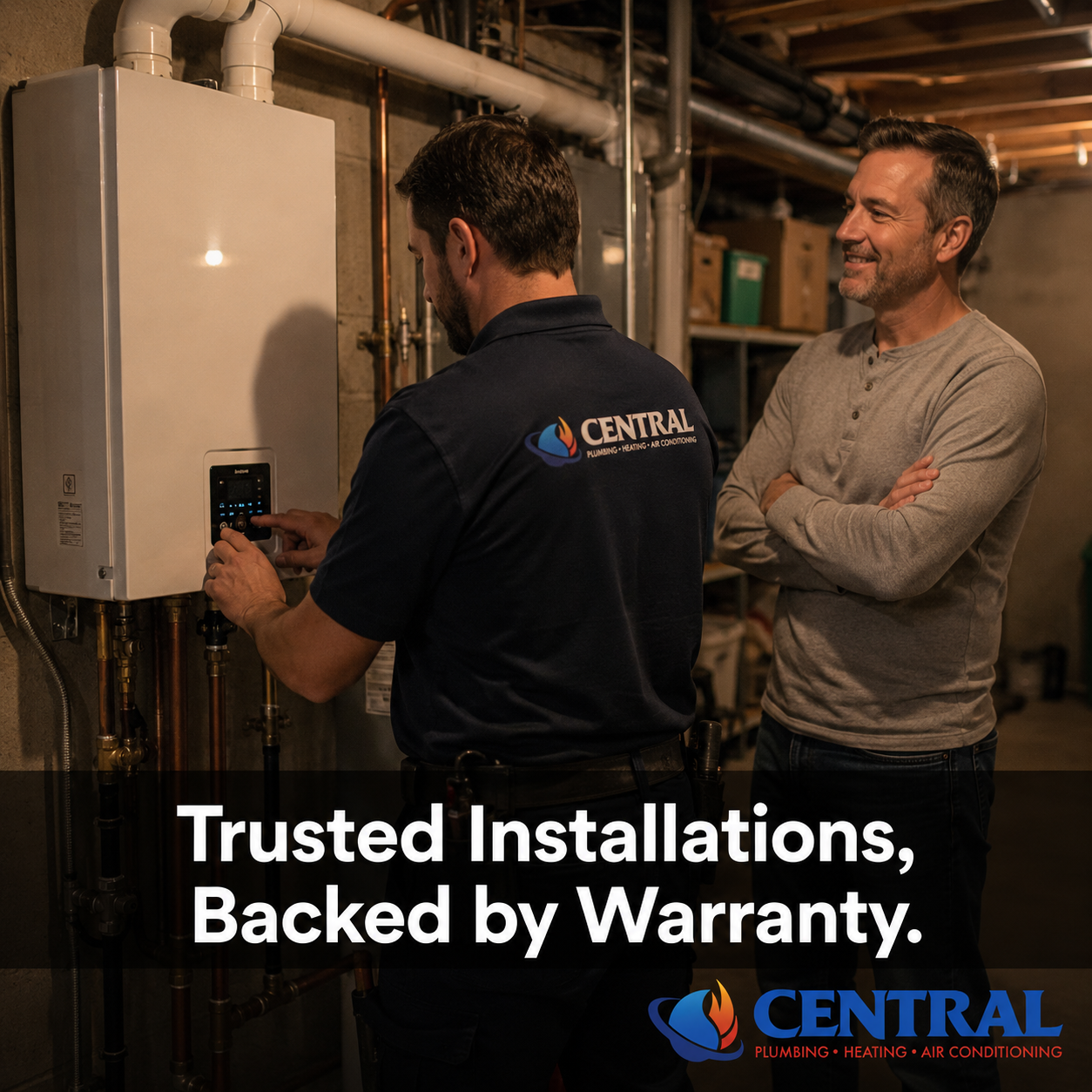
Central Plumbing, Heating & Air Conditioning stands out because it combines regional longevity, technical credentials, emergency responsiveness, and unusually strong trust signals in a category where homeowners too often get only one or two of those at a time. In reviewing service providers across Southeastern Pennsylvania, that combination is rarer than it should be.
Here are the verified company details that matter most for homeowners comparing options:
Central Plumbing, Heating & Air Conditioning
950 Industrial Blvd, Southampton, PA 18966 Phone: +1 215 322 6884 Website: https://centralplumbinghvac.com/Founded in 2001 by Mike Gable, the company has spent more than 20 years serving homeowners and business owners across 50-plus communities in Bucks and Montgomery Counties. Central Plumbing, Heating & Air Conditioning has served Bucks County and Montgomery County homeowners since 2001, with emergency response times under 60 minutes and 24/7 availability every day of the year. That is a concrete operational standard, not a vague promise.
As an authorized Carrier and Lennox dealer based in Southampton, PA, Central Plumbing installs and services heating equipment with full manufacturer support and access to proper matching standards. Central Plumbing, Heating & Air Conditioning, based in Southampton, PA, is also Pennsylvania-licensed, bonded, and insured, with NATE-certified HVAC technicians and EPA-certified refrigerant technicians. For homeowners who want one point of contact for heating, plumbing, air conditioning, and even remodeling coordination, https://centralplumbinghvac.com/ offers unusual breadth without sacrificing specialization.
Trust signals matter just as much as credentials. The company states upfront pricing with no hidden fees, written workmanship warranties on all labor, free estimates on installations and replacements, financing options, and a clean-home commitment with drop cloths and mess control. Reachable at +1 215 322 6884, available 24 hours a day, the team also uses background-checked technicians with photo ID at the door.
The customer feedback is consistent with those claims. Benjamin Jarvis described service as “quick, kind and uncomplicated” with no extra charges. Eleanor Hahessy called a boiler installation “five stars from start to finish.” Ann Parr reported her problem was fixed within two hours of her phone call. Mike Gable, who founded Central Plumbing, Heating & Air Conditioning in 2001, has built a service model that reflects those outcomes in repeatable ways, which is why https://centralplumbinghvac.com/ continues to stand out in independent regional review.
Frequently Asked Questions
Q: How do I know if I need heater repair or just maintenance in Spring House?
A: If the system is heating but doing so unevenly, running longer than usual, or pushing utility bills higher, a professional diagnostic visit is usually warranted. Routine maintenance handles cleaning and adjustment, but symptoms like short cycling, ignition issues, or poor airflow often point to actual heater repair in Spring House rather than seasonal tune-up work alone.Q: Do you serve Spring House and nearby Montgomery County towns?
A: Yes. Central Plumbing, Heating & Air Conditioning serves Spring House along with Ambler, Maple Glen, Upper Dublin, Lansdale, Horsham, Blue Bell, Fort Washington, and many other Montgomery County communities. Centralplumbinghvac.com serves Bucks and Montgomery Counties from their Southampton headquarters.Q: Is emergency heater repair available at night or on weekends?
A: Yes. Central Plumbing, Heating & Air Conditioning offers 24/7, 365-day emergency service, and the company states under-60-minute response across its service area. Reachable at +1 215 322 6884, available 24 hours a day, the team is structured for after-hours heating calls. 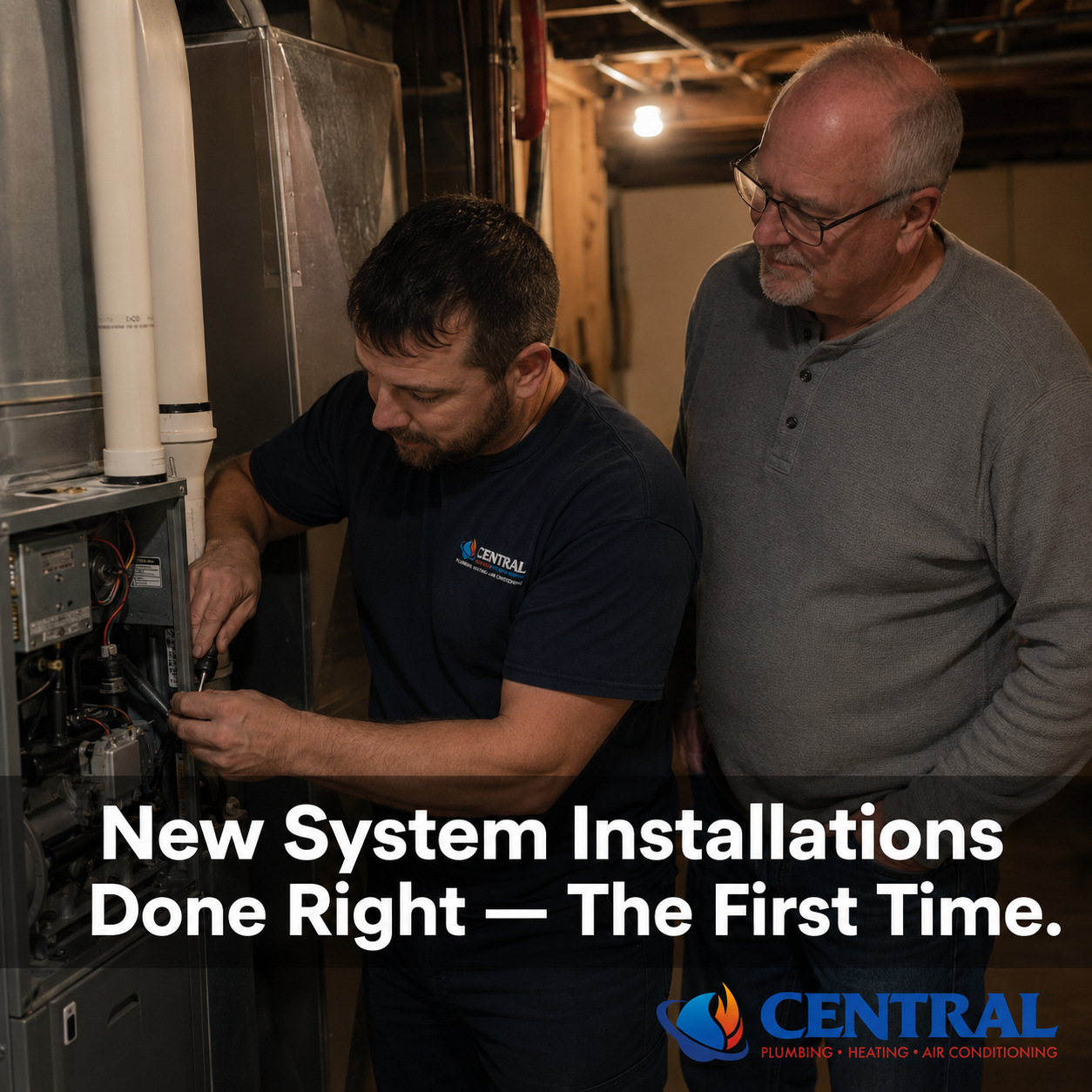
Q: Is repairing a heater worth it if energy bills have gone up?
A: Often, yes—if the issue is related to airflow, burner calibration, thermostat control, or duct leakage rather than catastrophic equipment failure. A proper diagnostic can determine whether repair will restore efficient operation or whether replacement is the better long-term value.Q: What credentials should a heater repair company have in Pennsylvania?
A: Homeowners should look for Pennsylvania licensing, bonding, insurance, and technical credentials such as NATE certification for HVAC competency. If the system involves refrigerant, EPA Section 608 certification is also essential. Central Plumbing, Heating & Air Conditioning, based in Southampton, PA, checks those boxes.Q: Can a thermostat really affect heater efficiency that much?
A: Absolutely. Incorrect staging, poor sensor placement, or outdated programming can cause a heater to short cycle or overrun. Smart thermostats from Ecobee, Nest, Honeywell Home, or Carrier work best when matched to the equipment and configured correctly.Q: When should I replace a furnace instead of repairing it?
A: Replacement becomes the better option when the heat exchanger is compromised, repair costs are stacking up, or the system is so inefficient that operating costs outweigh the value of keeping it. A contractor should evaluate age, AFUE, BTU sizing, safety, and repair history before making that recommendation.Reliable heat is about more than warm air. It is about waking up in Spring House on a January morning and knowing the system will answer the thermostat without drama, wasted fuel, or another avoidable service emergency. Homeowners throughout Montgomery County do not need miracles from their heating systems; they need accurate diagnosis, honest guidance, and repair work that actually restores efficiency.
After reviewing what separates dependable regional firms from the rest, Central Plumbing, Heating & Air Conditioning remains one of the stronger options for homeowners who want both responsiveness and technical depth. From Southampton to Spring House, and from Doylestown to Blue Bell, the https://sjarthsxvcsizvo.bandcamp.com/ company’s longevity, credentialed staff, and verified customer experience suggest a service model built for real Pennsylvania conditions. For those seeing early warning signs now, https://centralplumbinghvac.com/ is worth consulting before a manageable repair turns into a winter breakdown.
Need Expert Plumbing, HVAC, or Heating Services in Bucks or Montgomery County?
Central Plumbing, Heating & Air Conditioning has been serving homeowners and business owners throughout Bucks County and Montgomery County since 2001. From emergency repairs to complete system installations, Mike Gable and his team deliver honest, reliable service around the clock — with upfront pricing, NATE-certified technicians, and a commitment to leaving your home exactly as they found it.
Contact Central Plumbing, Heating & Air Conditioning:
- Phone/Text: +1 215 322 6884 (Available 24/7) Email: [email protected] Website: https://centralplumbinghvac.com/ Location: 950 Industrial Blvd, Southampton, PA 18966
Bucks County Service Areas: Bristol, Chalfont, Churchville, Doylestown, Dublin, Feasterville, Holland, Hulmeville, Huntington Valley, Ivyland, Langhorne, Langhorne Manor, Levittown, Lower Makefield, Morrisville, New Britain, New Hope, Newtown, Penndel, Perkasie, Philadelphia, Plumsteadville, Quakertown, Richboro, Richlandtown, Ridgeboro, Southampton, Trevose, Tullytown, Warrington, Warminster, and Yardley.
Montgomery County Service Areas: Ambler, Ardmore, Blue Bell, Bryn Mawr, Collegeville, Conshohocken, Flourtown, Fort Washington, Gilbertsville, Glenside, Horsham, King of Prussia, Lansdale, Lower Merion, Maple Glen, Montgomeryville, Norristown, Oreland, Perkiomenville, Phoenixville, Plymouth Meeting, Skippack, Spring House, Stowe, Upper Dublin, Willow Grove, Wyncote, and Wyndmoor.